
What you'll work on
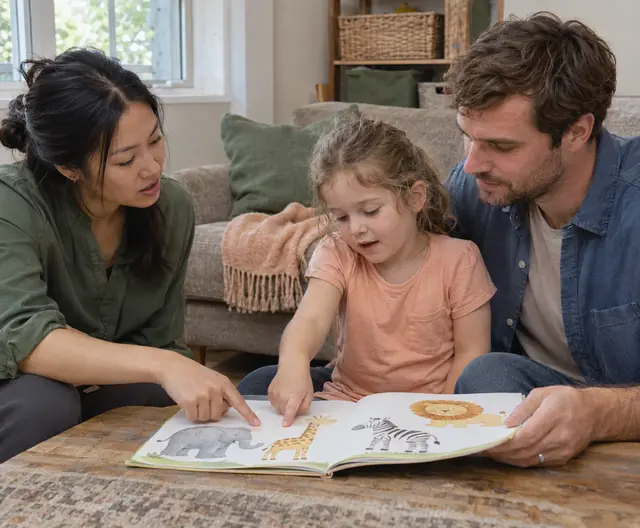
- Encouraging communication and requests
- Making routines like mealtimes, bedtime and outings go more smoothly
- Responding to challenging behavior consistently
- Helping siblings and other caregivers use the same approach
Most insurance plans that cover ABA, including Georgia Medicaid plans, include parent training as part of the treatment plan.
What a coaching session involves
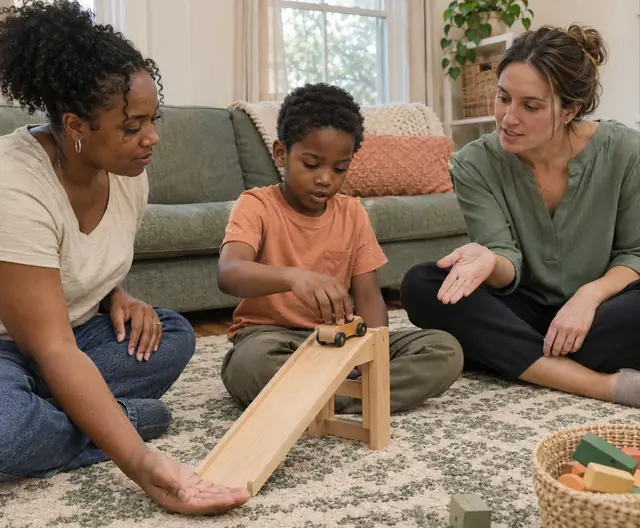
Most BCBAs use a simple cycle called behavioral skills training:
- Explain. Your BCBA describes one strategy and why it works.
- Show. They model it with your child or role-play it with you.
- Practice. You try it while the BCBA watches.
- Feedback. They tell you what went well and what to adjust, and you try again.
Practicing during a real routine, like snack time or getting into the car, sticks better than talking about it. Sessions can take place at home, at ABA Journey's Stockbridge clinic for Georgia families, or by video, depending on your plan and state rules.
Typical topics
- Giving clear, simple instructions and following through
- Using visual schedules and "first, then" boards
- Praising and rewarding the behavior you want to see more often
- Staying calm and safe during a meltdown, and what to do afterward
- Encouraging your child to ask for help instead of getting frustrated
- Planning outings, appointments and family visits
How often it happens
Parent training is set in your child's treatment plan, commonly a few times a month. Your BCBA agrees a schedule with you that fits your week. If the goals start to feel like too much, say so: the BCBA can slow down, focus on the single most important goal, or move sessions to a better time.
You're a partner, not the problem
Being offered parent training doesn't mean you're doing anything wrong. It's part of every good ABA program because you spend far more hours with your child than any therapist does. The goal isn't to turn you into a therapist. It's a few practical strategies that fit your normal day. Grandparents, older siblings, babysitters and a co-parent can usually join, too. When every adult responds the same way, children learn faster.
Making strategies stick
- One routine at a time. Practice a strategy during the same routine each day, such as getting dressed, before adding another.
- Use reminders. A sticky note or phone reminder with the key steps helps on busy days.
- Jot down what happened. A quick note about what worked and what didn't gives your BCBA useful information for the next session.
- Ask for a video model. Some BCBAs show a short demonstration you can watch again.
Your goals are measured too
Parent training goals are written and tracked like your child's goals. One might read: "Parent will use a 'first, then' visual at bath time on 4 of 5 nights." Your BCBA reviews progress on these goals and updates them along with your child's.
Coverage
Most insurance plans that cover ABA include parent and caregiver training in the treatment plan, and it has its own billing code (97156) for family guidance by the BCBA. We confirm what your plan covers during the benefits check. Read more in ABA parent training: what you'll learn.
Next step
Talk with our intake team
Tell us your child's age, your ZIP code and your insurance. We'll check your benefits, confirm availability for your address and explain next steps, with no obligation.
Common questions
How often is parent training?
It's set in your child's treatment plan, commonly a few times a month. Your BCBA will agree a schedule with you.
Who can come to parent training sessions?
Parents and other regular caregivers, such as grandparents, a co-parent or a babysitter, can usually take part. Ask your BCBA how to include them, including in two households if you share custody.
Can parent training happen by video?
Often, depending on your insurance plan and state rules. Video lets your BCBA watch a real routine at home and coach you in the moment.