
Start with the doctor
Before changing routines, ask your pediatrician about medical causes such as reflux, sleep apnea, allergies or medication side effects.
Building a bedtime routine
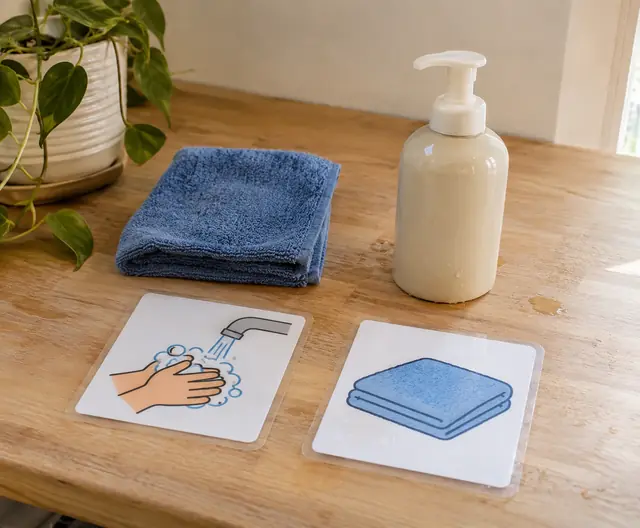
- Same steps, in the same order, every night
- A picture schedule your child can follow
- Calm activities in the last half hour; screens off
- A consistent bedtime and wake time, including weekends where possible
How ABA helps
- Data: a simple sleep log shows patterns you might miss.
- Teaching steps: each part of the routine is taught and practiced.
- A plan for night waking: a calm, consistent response from every adult.
- Parent coaching: your BCBA helps you stick with the plan through the hard first weeks.
Changes usually take a few weeks to show. Consistency matters more than any single technique.
Daytime habits that help nighttime
Sleep problems are common in autistic children, and many of the strategies that help start during the day. The Autism Treatment Network's sleep tool kits, written by sleep researchers, suggest:
- Waking up at the same time every day, including weekends
- Getting daylight and physical activity, especially in the morning
- Avoiding caffeine, including soda and chocolate later in the day
- Keeping naps short and early, for children who still nap
- Using the bed for sleep, not for screens or long play
Setting up the bedroom
- Dark: blackout curtains, and a dim night light only if needed
- Quiet, or steady background noise such as a fan
- Comfortable temperature and pajamas your child finds comfortable to wear
- Screens out of the room, or turned off at least 30 minutes before bed
When your child wakes at night
Keep night wakings calm, quiet and boring. Use the same short phrase each time, such as "It's sleep time," and return your child to bed with as little talk and light as possible. If your child has learned to fall asleep only with a parent in the room, a BCBA can help you plan a gradual change, such as moving a chair a little further from the bed every few nights.
Keeping a sleep diary
For two weeks, write down bedtime, time asleep, night wakings, wake-up time, naps, and anything unusual that day. Bring it to your child's doctor and BCBA. Patterns often show up that you wouldn't notice otherwise.
Medical causes come first
Snoring, gasping, reflux, constipation, allergies and some medications can all affect sleep. Talk with your child's doctor before starting any supplement, including melatonin, so the right dose and approach are chosen for your child.
A sample visual bedtime routine
- Screens off
- Bath or wash
- Pajamas
- Brush teeth
- Toilet
- Story or quiet song
- Lights off, same goodnight words
Use a picture for each step and let your child move or check off each one. Keep the order the same every night, and aim for a routine of about 20 to 30 minutes.
Sleep for autistic teens
Teens' body clocks naturally shift later, which can make early school mornings hard. The Autism Treatment Network's sleep guide for teens recommends a consistent schedule on school days and weekends, opening the curtains or turning on lights right after waking, getting dressed out of sleep clothes soon after waking, a regular breakfast time, and turning off TV, computers and other screens at least 30 minutes before bed.
When to ask for more help
If sleep problems continue after several weeks of a consistent routine, or if your child snores loudly, stops breathing during sleep or is very sleepy during the day, talk with your child's doctor. A referral to a sleep specialist may help.
Related guides
Sources
- Autism Speaks ATN/AIR-P: Strategies to improve sleep in children with autism
- Autism Speaks ATN/AIR-P: Sleep strategies for teens with autism
Next step
Talk with our intake team
Tell us your child's age, your ZIP code and your insurance. We'll check your benefits, confirm availability for your address and explain next steps, with no obligation.
Common questions
Will ABA therapists come at bedtime?
Sometimes sessions are scheduled during evening routines. More often, your BCBA coaches you in parent training so you can run the routine.
Should I give my autistic child melatonin?
Talk with your child's doctor first. They can check for medical causes of poor sleep and advise whether melatonin is appropriate and in what dose.
How can I help my autistic teenager sleep better?
Keep the same schedule every day, get light soon after waking, keep regular mealtimes and turn screens off at least 30 minutes before bed. Talk with the doctor if problems continue.